
8 Gentle Ways to Help a Child with Anger.
All children experience anger. It is a normal emotion — just like happiness, sadness, or excitement. But for many children, anger can feel overwhelming, confusing, and even frightening. Parents often wonder how to help a child with anger in ways that are supportive rather than punitive.
The truth is, anger is rarely the real problem. It is usually a signal that something deeper is going on inside a child — frustration, hurt, disappointment, fear, or feeling misunderstood.
When we begin to see anger as communication rather than bad behaviour, everything changes.
Understanding Big Feelings in Children
Young children are still learning how to regulate emotions. Their brains are developing the ability to pause, reflect, and choose responses. When emotions surge quickly, they can feel out of control.
This is why children may:
Shout or scream
Throw objects
Cry intensely
Refuse to cooperate
Become physically aggressive
These behaviours are often signs that a child does not yet have the skills to manage strong feelings safely.
Instead of punishment, children need guidance
Why is my child so aggressive?
Sometimes parents worry that aggressive behaviour means their child is becoming “bad” or deliberately difficult. In reality, aggression is often a child’s way of communicating emotions they don’t yet know how to express safely. Tiredness, frustration, anxiety, sensory overload, or difficulty managing big feelings can all lead to hitting, kicking, biting, or shouting.
If you’ve ever found yourself asking, “Why is my child so aggressive?”, you may find my guide Why Is My Child So Aggressive? 7 Eye-Opening Reasons Every Parent Should helpful. It explains the common causes of aggressive behaviour and offers gentle, practical ways to help children express their feelings in healthier ways.
8 Gentle Ways to Help a Child with Anger
1. Stay calm yourself
When learning how to help a child with anger, staying calm yourself is an important first step. Children borrow regulation from adults, and your steady presence helps their nervous system settle.
2. Name the Feeling
Simple language helps children understand their experience. ‘You’re feeling really angry right now.’
3. Validate before correcting
Validation does not mean approving behaviour. It means acknowledging emotion:
“I understand you’re upset. Let’s find a safe way to handle it.”
4. Offer calming strategies
An important part of learning how to help a child with anger is introducing simple calming tools such as:
Deep breathing
Quiet time
Hugging a soft toy
Counting slowly
Movement (jumping, stretching)
5. Teach after the Storm passes
Learning happens best when children are calm, not in the middle of an angry outburst or meltdown. When your child is overwhelmed, focus first on helping them feel safe and settled.
Later, when the emotion has passed, gently talk about what happened. You might ask:
- “What made you feel so angry?”
- “What did you notice happening in your body?”
- “What could we try next time?”
- “Is there something that would help you feel calmer?”
Keep the conversation warm and free from blame. The aim is not to make your child feel ashamed, but to help them understand their emotions and practice healthier ways to respond.
These calm conversations gradually teach children that anger can be understood, expressed safely and managed with support.
6. Help your child build Frustration Tolerance
Children often become angry when things do not go as expected. Losing a game, struggling with homework or hearing “no” can all trigger frustration.
Instead of immediately solving the problem, help your child pause, calm down and consider what they could try next. Encourage them to break difficult tasks into smaller steps, ask for help or try a different approach.
These everyday experiences gradually teach children that frustration is uncomfortable but manageable.
For more ideas, read:
Frustration Tolerance in Children: 9 Powerful Ways to Help Your Child Cope When Things Go Wrong.
Disappointment can also trigger anger when children lose, make mistakes or do not get what they hoped for. Discover more gentle strategies in Helping Children Cope with Disappointment – 7 Proven Ways to Build Resilience for Life.
7. Using Stories to Teach Emotional Skills.
One of the most powerful ways to help children understand emotions is through storytelling. Books allow children to see feelings from the outside, recognise themselves in characters, and learn new ways to cope.
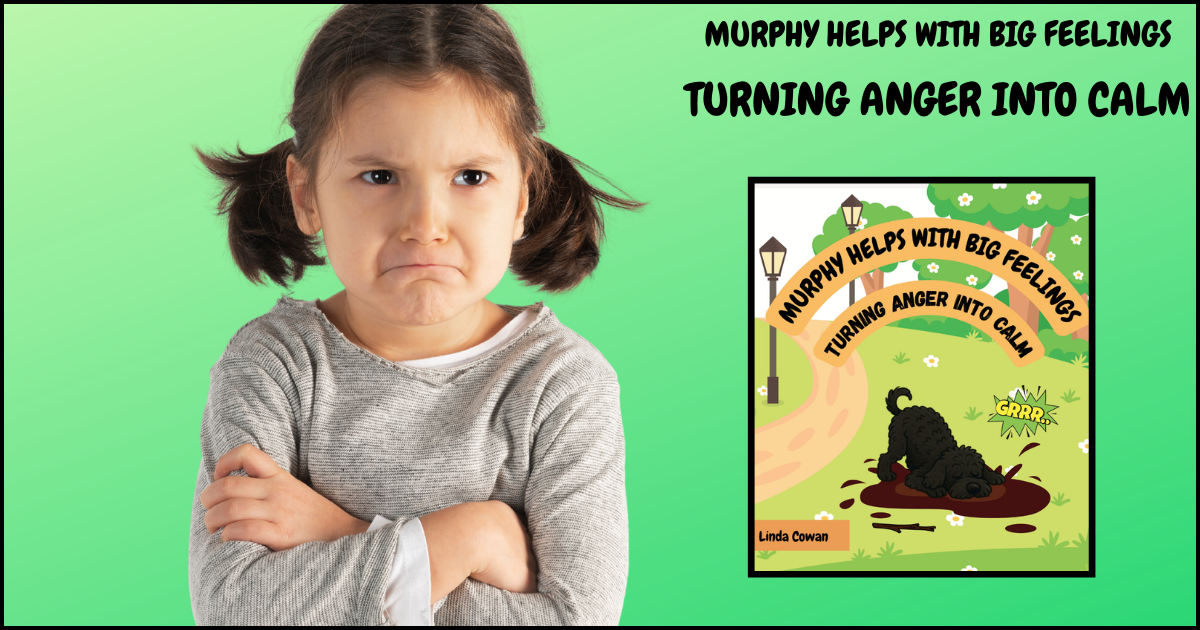
That is exactly why I wrote Murphy Helps with Big Feelings: Turning Anger into Calm — a gentle story where Murphy learns how to handle overwhelming emotions safely and find calm again.
You can explore the book here:
👉 Shop on my website
👉 Also available on Amazon
Stories create emotional safety. Children realise:
“I’m not the only one who feels this way.”
That understanding alone can be deeply reassuring.
8. Set Calm and Consistent Boundaries
Children need to know that all feelings are acceptable, but not every behaviour is safe or appropriate. You can acknowledge your child’s anger while setting a clear limit:
“It is okay to feel angry, but it is not okay to hit. Let’s find a safer way to show how you feel.”
Keep boundaries simple, calm and consistent. Avoid lengthy explanations while your child is overwhelmed. Once they are settled, you can talk together about safer choices, such as using words, taking a break, squeezing a cushion or asking an adult for help.
When learning how to help a child with anger, combining empathy with clear boundaries helps children feel both understood and secure. Over time, they learn that strong emotions can be expressed without hurting themselves, other people or their surroundings.
A Free Calming Resource for Children
If you are learning how to help a child with anger, this free printable activity gives children a fun, creative way to practise calming skills.
You can download it here:
Colouring can be surprisingly therapeutic. It slows breathing, focuses attention, and provides a quiet space for emotions to settle.
BUILDING EMOTIONAL SKILLS FOR LIFE
Learning how to help a child with anger begins with recognising that angry behaviour is often a sign that a child feels overwhelmed and needs calm guidance.
When children struggle with anger, they are not being difficult—they are having difficulty. With patience, clear boundaries and practical calming tools, children can gradually develop:
- Self-awareness
- Emotional regulation
- Problem-solving skills
- Resilience
- Healthy relationships
Every difficult emotional moment can become an opportunity to learn. Most importantly, children discover that they are safe, loved and understood—even when their feelings become very big.
If you are looking for more gentle stories to support children’s emotions, you may also find this helpful:
5 POWERFUL BOOKS THAT HELP CHILDREN MANAGE EMOTIONS
For quick support during an angry moment, read:
CHILD ANGER MANAGEMENT: 5 SIMPLE TECHNIQUES TO CALM BIG FEELINGS QUICKLY
You may also find this helpful: How to Calm an Angry Child – 7 Proven Responses that Really Work