
INTRODUCTION - GROUNDING EXERCISES FOR KIDS
Grounding exercises for kids can be a wonderfully simple way to help children when big feelings, worries, frustration, or overwhelm begin to take over. When a child is upset, it can be difficult for them to think clearly or explain what is wrong. Sometimes they simply need help reconnecting with the safety of the present moment.
During my years working as a counsellor, I supported many children who found it difficult to manage strong emotions. One thing I learned was that children often respond best to calming techniques that are simple, practical and easy to remember.
Grounding does exactly that. Instead of telling a child to “calm down,” it gives them something specific to focus on — what they can see, hear, touch, smell or feel in their body.
In this article, we’ll explore 10 grounding exercises for kids that parents can gently introduce at home, at bedtime, before school or whenever big feelings appear.
What Are Grounding Exercises for Kids?
Grounding exercises help bring a child’s attention away from overwhelming thoughts or emotions and back to what is happening around them right now.
Think of grounding as helping your child put their feet back on solid ground emotionally.
For example, rather than focusing on the thought:
“What if something bad happens at school tomorrow?”
you might gently encourage your child to notice the soft blanket they are holding, the sound of birds outside or the feeling of their feet touching the floor.
Grounding doesn’t mean ignoring a child’s feelings. It means helping their body and mind settle enough so they can cope with those feelings more comfortably.
If your child needs a wider range of calming ideas, you may also find my pillar article 10 Calming Activities for Kids That Actually Work helpful.
1. Try the 5-4-3-2-1 Grounding Exercise
This is one of the best-known grounding techniques and can easily be adapted for children.
Ask your child to find:
- 5 things they can see
- 4 things they can touch
- 3 things they can hear
- 2 things they can smell
- 1 thing they can taste
Don’t worry if your child can’t complete every step perfectly. The purpose isn’t to get the answers right — it’s to gently redirect their attention to the present moment.
For younger children, you can make it into a game by doing it together.
2. Feel Your Feet on the Floor
This is one of the simplest grounding exercises for kids, and it can be done almost anywhere.
Encourage your child to place both feet firmly on the floor.
You might say:
“Can you feel the floor underneath your feet? Push your feet down gently. Is the floor hard or soft? Warm or cold?”
This gives your child something physical and steady to focus on.
You can even encourage them to wiggle their toes inside their shoes and notice how that feels.
3. Hold Something Soft
Touch can be very comforting for children.
Give your child something soft or familiar to hold, such as:
- A favourite teddy
- A soft blanket
- A cushion
- A fluffy toy
- A favourite piece of fabric
Encourage them to notice how it feels.
Is it soft? Smooth? Fluffy? Warm?
Focusing on these small details can gently shift attention away from overwhelming thoughts and towards something safe and familiar.
4. Name Five Colours Around You
This is a lovely grounding activity because children can use it almost anywhere.
Ask:
“Can you find five different colours in this room?”
Your child might notice a blue cushion, a yellow toy, a green book or a red jumper.
You can make the exercise more playful by choosing one colour and asking your child to find everything in the room that matches it.
This works especially well for younger children who may struggle with more complicated calming exercises.
5. Use Slow Breathing With Grounding
Breathing and grounding work beautifully together.
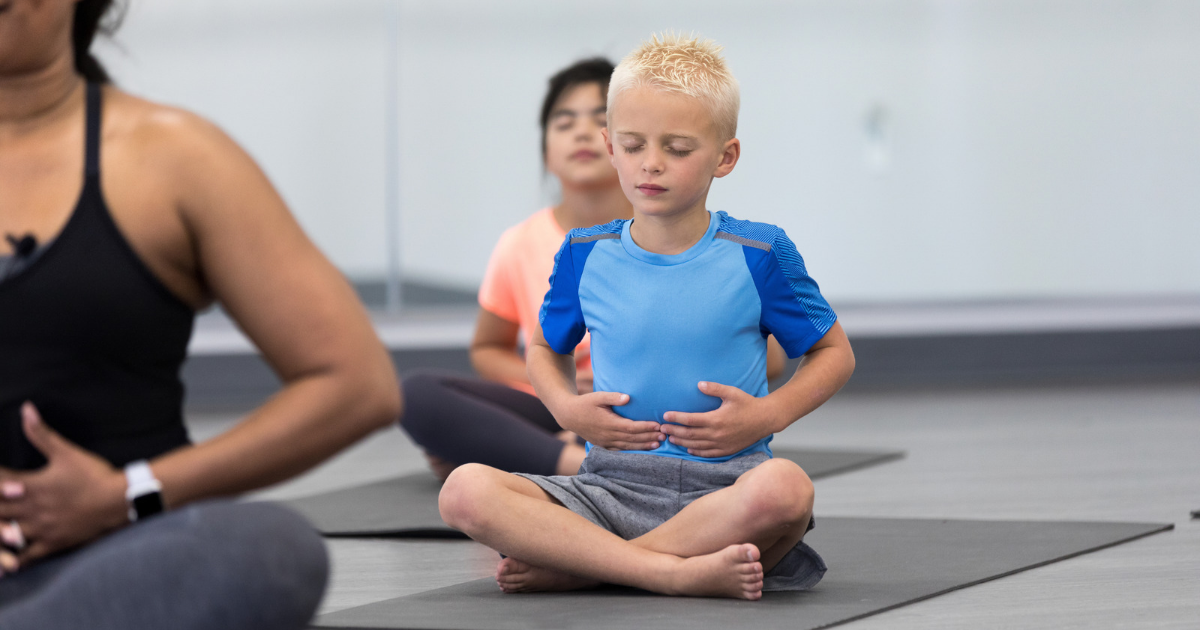
Ask your child to put one hand on their tummy and take a slow breath in through their nose.
Then breathe out gently.
You might say:
“Feel your tummy move as you breathe in…and feel it soften as you breathe out.”
Rather than asking your child to take lots of deep breaths, keep it slow and comfortable.
If your child enjoys breathing activities, you can also read 7 Simple Breathing Exercises for Children That Help Calm Big Feelings for more playful ideas.
6. Describe an Object in Detail
Choose an everyday object — perhaps a toy, pencil, stone or shell — and ask your child to describe it.
Questions might include:
- What colour is it?
- Is it heavy or light?
- Is it smooth or rough?
- Is it warm or cold?
- What shape is it?
This simple exercise encourages the brain to focus on something concrete rather than the thoughts or emotions that are becoming overwhelming.
A Gentle Way to Continue Supporting Your Child
Helping children manage big emotions is something that can be practised little by little during calm moments too.
If you’d like to continue supporting your child at home, my children’s book Murphy Helps with Big Feelings gently introduces young children to understanding and managing strong emotions through Murphy’s story.
You can find Murphy Helps with Big Feelings on my shop HERE
or on Amazon HERE
It can be especially helpful to read together when your child is already calm, opening up natural conversations about what they can do when big feelings arrive.
7. Try the “I Am Here” Exercise
This is a very simple verbal grounding technique.
Encourage your child to say:
“My name is ____. I am at home. I am sitting on my bed. Mum/Dad is here with me. I am safe right now.”
You can adapt the words to suit your child’s age and circumstances.
The important part is bringing their attention back to where they are and what is happening right now, rather than what they fear might happen.
Never force a child to repeat the words. You can simply say the reassuring statements yourself if they prefer to listen.
8. Listen for Three Sounds
Ask your child to become a “sound detective.”
Sit quietly together and listen.
Can they hear:
- A clock ticking?
- Birds outside?
- A car passing?
- Someone talking?
- The washing machine?
- Their own breathing?
Ask them to find three sounds.
This is one of the easiest grounding exercises for kids to use when you’re away from home because you don’t need any special equipment.
9. Hold Something Cool
A cool sensation can give children something immediate and physical to focus on.
You could offer:
- A cool flannel
- A chilled drinks bottle
- A cool spoon
- A smooth stone kept somewhere cool
Ask:
“How does that feel in your hand?”
Keep the sensation comfortable — never painfully cold.
The goal is simply to give the child’s attention a gentle physical anchor.
10. Create a Grounding Box
A grounding box can be a lovely addition to your child’s calming space.
You could fill a small box with safe items that engage different senses, such as:
- A soft piece of fabric
- A favourite photograph
- A smooth stone
- A small sensory toy
- A comforting note
- A colouring page and crayons
Let your child help choose what goes inside.
The box then becomes something familiar they can reach for when they need help settling their emotions.
Practice Grounding When Your Child Is Calm
One of the most important things parents can do is practice these activities before they are desperately needed.
If you introduce a new technique for the first time in the middle of a meltdown, your child may not want to try it.
Instead, practise during relaxed moments.
You might say:
“I’ve found a little calming game. Shall we try it together?”
This removes pressure and helps your child become familiar with the technique.
Over time, they may begin to recognise which strategies help them most.
Help Your Child Build Self-Regulation Skills
As your child becomes familiar with grounding exercises, they may gradually begin to notice something important — how their body and emotions feel before big feelings completely take over.
This awareness is an important part of developing self-regulation.
Self-regulation doesn’t mean expecting children to calm themselves down without help. Young children still need reassurance, connection and support from the adults they trust. But over time, they can begin learning to recognise their own emotional signals and discover which strategies help them feel calmer and more in control.
For example, your child might begin to notice, “My tummy feels funny when I’m worried,” or “My hands get tight when I’m angry.” With practice, they can then learn to choose something that may help — perhaps grounding their feet on the floor, taking slow breaths, moving their body or finding a quiet space.
If you’d like to help your child develop these skills further, read Self-Regulation Activities for Kids: 10 Powerful Ways to Build Calm and Control. It includes 10 simple activities you can practice together to help your child gradually build emotional awareness, calm and greater self-control.
Free Murphy Colouring Page
Sometimes a quiet, familiar activity can also help children slow down and settle.
I’ve created a free Murphy colouring page HERE that your child can enjoy during a calm moment or add to their own grounding or calming box.
Final Thoughts – Grounding exercises for kids
Big feelings are part of childhood, and children don’t learn emotional regulation overnight. They develop these skills gradually through reassurance, repetition and the calm support of the adults around them.
You don’t need to use all ten activities. Choose one or two that seem to suit your child and practise them together when things are calm.
Most importantly, remember that grounding isn’t about making uncomfortable feelings disappear. It is about helping your child feel steady enough to move through those feelings safely and confidently.
With patience and practice, grounding exercises for kids can become another useful tool your child can carry with them as they learn to understand and manage their big feelings.


